
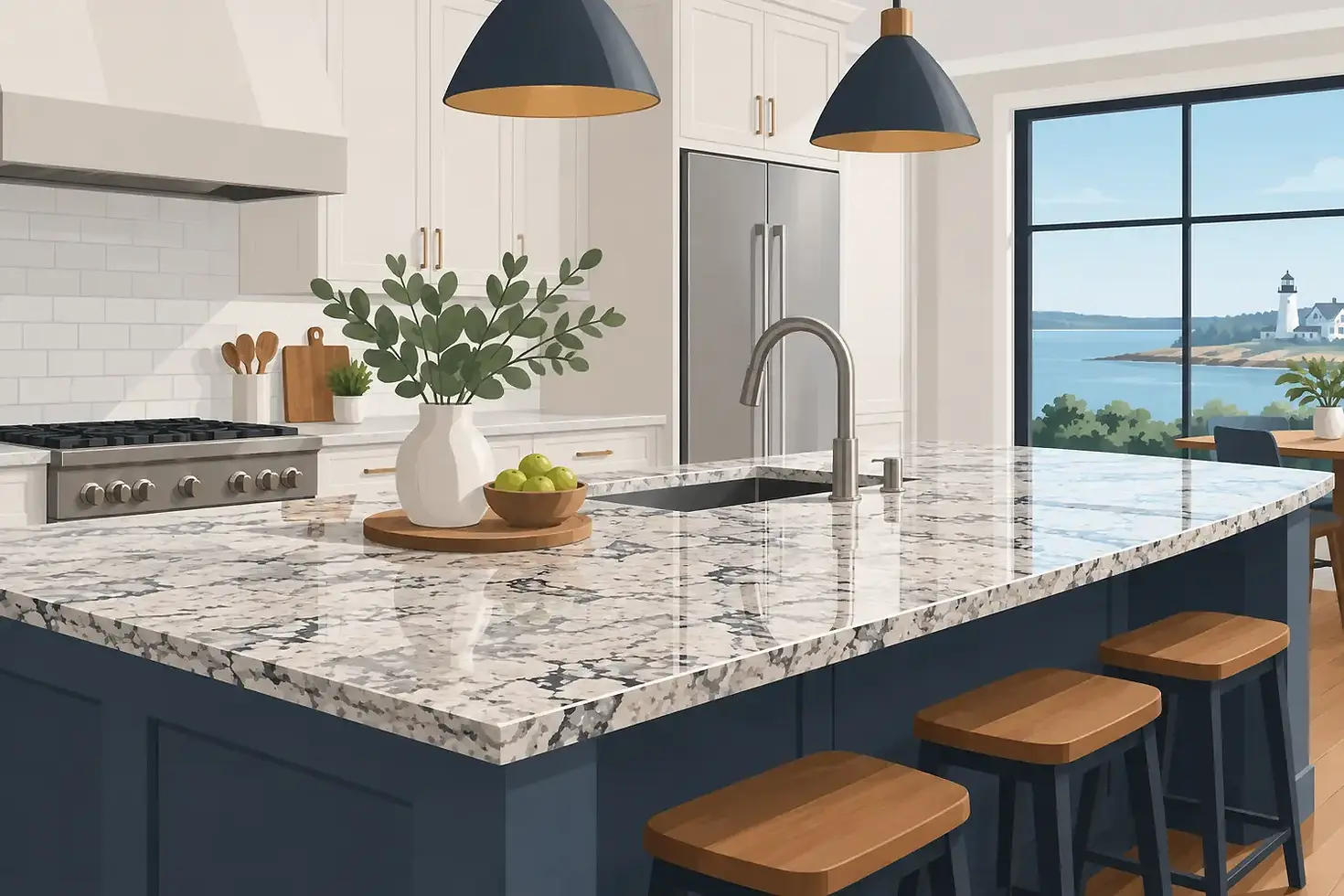
Custom Granite Countertops Connecticut Homeowners Choose
A granite countertop should feel like it belongs to the home, not like a surface selected from a sample rack. For homeowners planning custom granite countertops Connecticut projects, the real value lies in the details: the slab’s movement and color, the way it meets cabinetry, the placement of seams, and the confidence that comes from a precise installation.
Granite remains a strong choice for Connecticut kitchens, bathrooms, bars, and fireplace surrounds because it brings natural character together with dependable everyday performance. Yet granite is not a one-size-fits-all material. Each slab has its own mineral composition, veining, pattern scale, and maintenance needs. A thoughtful fabrication and installation process turns those natural distinctions into stonework made personal.
Why Custom Granite Countertops Work So Well
Granite is formed by nature over time, which means no two installations are exactly alike. That individuality is a major part of its appeal. A quiet, finely grained granite can support a clean, tailored kitchen design, while a dramatic slab with sweeping veins can become the room’s defining feature.
For active households, granite also offers meaningful practical benefits. It is highly resistant to scratches and heat under normal kitchen use, and its solid surface holds up well to daily meal preparation, entertaining, and family routines. With proper sealing and reasonable care, it can retain its beauty for many years.
The material does ask for an informed choice. Some lighter or more porous granites may need more frequent sealing than dense, darker selections. Highly patterned slabs can make a bold statement, but they may not suit every cabinet style or room size. The best option depends on how the space will be used, the level of visual movement you prefer, and the other finishes already in the design.
Natural Variation Is Part of the Design
A small sample is useful for narrowing down color families, but it cannot show the complete character of a full granite slab. Mineral deposits, fissures, veins, and tonal shifts are natural features, not manufacturing defects. Viewing the actual slab gives homeowners and design professionals a clearer sense of how the stone will read across a large island, perimeter counters, or vanity top.
This step matters most with stones that have significant movement. A fabricator can help identify the most compelling areas of the slab and plan their placement around a sink, cooktop, waterfall edge, or full-height backsplash. That planning allows the finished surface to look intentional rather than interrupted.
Designing Custom Granite Countertops in Connecticut
The strongest countertop projects begin before fabrication. Cabinet dimensions, appliance specifications, plumbing locations, wall conditions, and overhang requirements all affect the final design. A countertop may appear simple in a rendering, yet require careful engineering once support needs, cutouts, and site measurements are considered.
In Connecticut homes, kitchens often combine established architectural character with updated cabinetry and appliances. Granite can bridge that balance particularly well. A leathered black granite may add depth to a painted traditional kitchen, while a soft gray or warm white stone can bring an elevated natural element to a more contemporary renovation.
Bathroom applications call for a different lens. A vanity top may be smaller, but the details are just as visible. The sink style, backsplash height, faucet reach, wall tile, and edge profile should work together. Granite can be an excellent vanity material for homeowners who want a substantial, lasting surface with more natural depth than a uniform engineered alternative.
Edge Profiles Change the Finished Look
The edge profile is one of the most visible custom decisions. A simple eased edge works well in many modern and transitional spaces because it is clean and practical to maintain. A beveled edge creates a little more shadow and definition, while an ogee or more decorative profile can complement traditional millwork.
There is no universally right edge. The scale of the kitchen, cabinet door style, and the visual weight of the stone should guide the choice. A thick, heavily veined island may need a restrained edge to avoid feeling overdesigned. Conversely, a quieter granite can support a more detailed profile if the room calls for it.
Seams and Layout Need Careful Attention
Most large countertop installations require seams, especially when an island exceeds the dimensions of a single slab or when access into the home limits what can be carried safely. The goal is not always to eliminate seams, since that may be physically impossible or unnecessarily costly. The goal is to place and fabricate them with care.
Experienced layout planning considers the stone pattern, the room’s sightlines, cabinet structure, and appliance locations. Seams should be as inconspicuous as possible while allowing the material to be transported and installed safely. For strongly veined granite, this may include vein matching so movement carries naturally from one section to the next.
What Precision Fabrication Protects
Granite is durable, but it is not indestructible. Sink and cooktop cutouts create areas that require accurate fabrication and appropriate support. Overhangs at seating areas may need brackets or other reinforcement, depending on their depth and the stone’s composition. Walls are rarely perfectly straight, particularly in older homes, so final measurements are essential.
Professional templating captures the actual conditions of the space after cabinets are installed and secured. This helps account for slight variations that cannot be reliably predicted from cabinet drawings alone. It also ensures that faucet holes, sinks, cooktops, and backsplash pieces align correctly at installation.
At Custom Stone LLC, the process is built around those practical details as well as the design vision. Material selection, layout conversations, fabrication, and installation should feel coordinated, so homeowners can move forward with confidence instead of managing separate decisions at every stage.
Caring for Granite Without Overthinking It
Granite care is straightforward when expectations are realistic. Wipe spills promptly, particularly oils, wine, citrus, and strongly colored foods. Use a pH-neutral stone cleaner or mild soap and water for regular cleaning, then dry the surface to prevent streaking. Abrasive powders, harsh bleach-based products, and acidic cleaners are best avoided because they can dull the finish or affect the sealer.
Sealing is not a rigid calendar task. Its frequency depends on the specific granite, finish, and use of the space. A simple water test can be helpful: if a few drops of water darken the stone noticeably after several minutes, it may be time to discuss resealing. Dense granite may require attention far less often than a more absorbent selection.
It is also wise to use cutting boards rather than treating the countertop as a cutting surface. Granite can damage knife edges, and repeated impacts in one area are unnecessary. Although granite tolerates heat well, trivets remain a smart habit for very hot cookware and protect the surface from sudden temperature changes.
Making the Investment Fit the Project
The cost of a custom granite countertop project reflects more than the material itself. Slab availability, thickness, pattern complexity, edge profile, cutouts, backsplash design, installation access, and support requirements can all influence the final quote. A highly dramatic stone may require additional planning to preserve its best visual features, while a straightforward layout can often be fabricated more efficiently.
Homeowners comparing quotes should make sure they are comparing the same scope of work. Ask whether templating, fabrication, sink and cooktop cutouts, edge finishing, delivery, installation, and any necessary supports are included. A lower initial number can be misleading if important services or details are excluded.
For builders and designers, clear decisions early in the schedule help prevent delays. Cabinet installation should be complete, appliances should be specified, and any changes to island dimensions or sink models should be communicated before templating. This is where reliable coordination protects both the timeline and the finished result.
A carefully selected granite countertop does more than complete a renovation. It gives the room a surface that invites daily use, reflects the character of the home, and continues to feel considered long after the construction work is finished.


Comments